
 admin
admin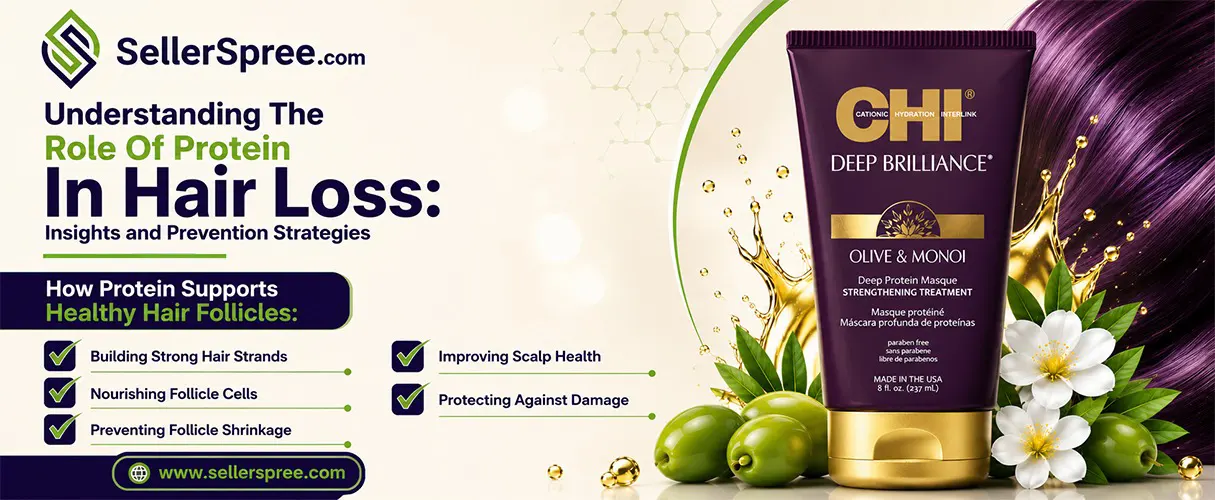
Shop Now: www.sellerspree.com
Protein is a fundamental component for maintaining healthy hair, as it forms the primary building blocks of hair strands. In this article, we’ll explore the connection between protein and hair health, how a deficiency impacts hair growth, and ways to prevent and address hair loss caused by protein insufficiency.
The Impact of Protein Deficiency on Hair Growth
A lack of protein can significantly affect your hair’s health and growth. Here’s how it manifests:
- Weak Hair Structure: Protein deficiency weakens the keratin structure, making hair brittle and prone to breakage.
- Slow Hair Growth: Inadequate protein delays the growth phase, reducing hair length over time.
- Excessive Hair Shedding: Without sufficient protein, more hair follicles enter the shedding phase prematurely.
- Thinning Hair: Hair strands become finer, resulting in visibly thinner hair.
- Scalp Issues: A protein deficit can lead to dryness, irritation, and reduced follicle function.
- Loss of Hair Pigment: Insufficient protein can lead to dull or greying hair.
How Protein Supports Healthy Hair Follicles
- Building Strong Hair Strands: Hair primarily consists of keratin, a structural protein formed in the follicles. Adequate protein intake ensures hair strands are strong and resilient.
- Nourishing Follicle Cells: Protein delivers essential amino acids like cysteine and methionine, crucial for follicle repair and growth.
- Preventing Follicle Shrinkage: Adequate protein keeps hair follicles robust, reducing thinning and hair loss.
- Improving Scalp Health: Proteins such as collagen enhance blood flow, moisture retention, and flexibility in the scalp, promoting follicle health.
- Protecting Against Damage: Proteins act as antioxidants, shielding follicles from free radical damage.
Effects of Protein Deficiency on Overall Health
Protein deficiency doesn’t just impact hair—it affects multiple bodily functions:
- Muscle Loss and Weakness: The body breaks down muscle tissue to meet protein needs, causing weakness.
- Skin and Nail Issues: Protein deficiency leads to dry skin, brittle nails, and slow wound healing.
- Weak Immune System: A lack of protein hampers antibody production, leading to frequent infections.
- Fatigue and Brain Fog: Protein supports energy production, and its deficiency can lead to tiredness and poor focus.
How to Address Hair Loss with Protein
- Enhance Your Diet: Include protein-rich foods such as lean meats, fish, eggs, dairy, lentils, quinoa, and nuts. Collagen-rich foods like bone broth and fish skin are excellent for scalp health.
- Use Protein-Based Hair Products: Incorporate treatments like keratin or silk protein masks to repair and strengthen strands. Balance these with moisturizing conditioners to prevent dryness.
- Supplement When Necessary: Consider protein powders or biotin supplements to boost keratin production.
- Adopt Hair-Safe Practices: Limit heat styling, bleaching, and harsh treatments that weaken strands. Use protective hairstyles to reduce follicle stress.
Choosing the Best Protein Supplements for Hair
- Collagen Supplements: Boosts keratin production and improves scalp elasticity.
- Whey Protein: Ideal for fast digestion and amino acid delivery.
- Plant-Based Proteins: Great for vegans, offering nutrients like biotin and iron.
- Hydrolyzed Keratin: Strengthens strands by improving amino acid absorption.
- Multivitamins with Protein: Combines essential hair nutrients like zinc, Vitamin D, and iron.
Tips for Maximizing Protein Intake for Hair Health
- Prioritize High-Quality Proteins: Include lean meats, seafood, legumes, and nuts.
- Spread Protein Consumption: Incorporate protein into every meal to maintain consistent amino acid levels.
- Pair with Hair-Healthy Nutrients: Combine protein with vitamins like biotin, zinc, and iron for enhanced results.
- Stay Hydrated: Proper hydration ensures efficient nutrient absorption for follicle nourishment.
How Long Does It Take for Hair to Recover?
- 1–4 Weeks: Initial improvements include reduced shedding and stronger strands.
- 3–6 Months: Noticeable regrowth begins as follicles enter the active growth phase.
- 6–12 Months: Significant improvement in hair density, length, and overall health.
Final Thoughts
Protein plays a vital role in maintaining healthy, strong hair. Ensuring adequate protein intake, using protein-enriched products, and adopting a hair-safe lifestyle can help prevent and reverse protein-related hair loss.
For high-quality hair care solutions, visit Sellerspree.com. They offer a wide range of hair care and hair color products from top brands, helping you achieve healthier, more vibrant hair. Explore their collection today to find products tailored to your hair needs!
Tags: Protein Hair Loss, Hair Loss Prevention, Hair Growth Tips, Protein Deficiency Hair Loss, Healthy Hair Growth, Hair Follicle Health, Hair Thinning Solutions, Keratin Hair Care, Hair Nutrition, Scalp Health