
 admin
Shop Now: https://www.sellerspree.com/
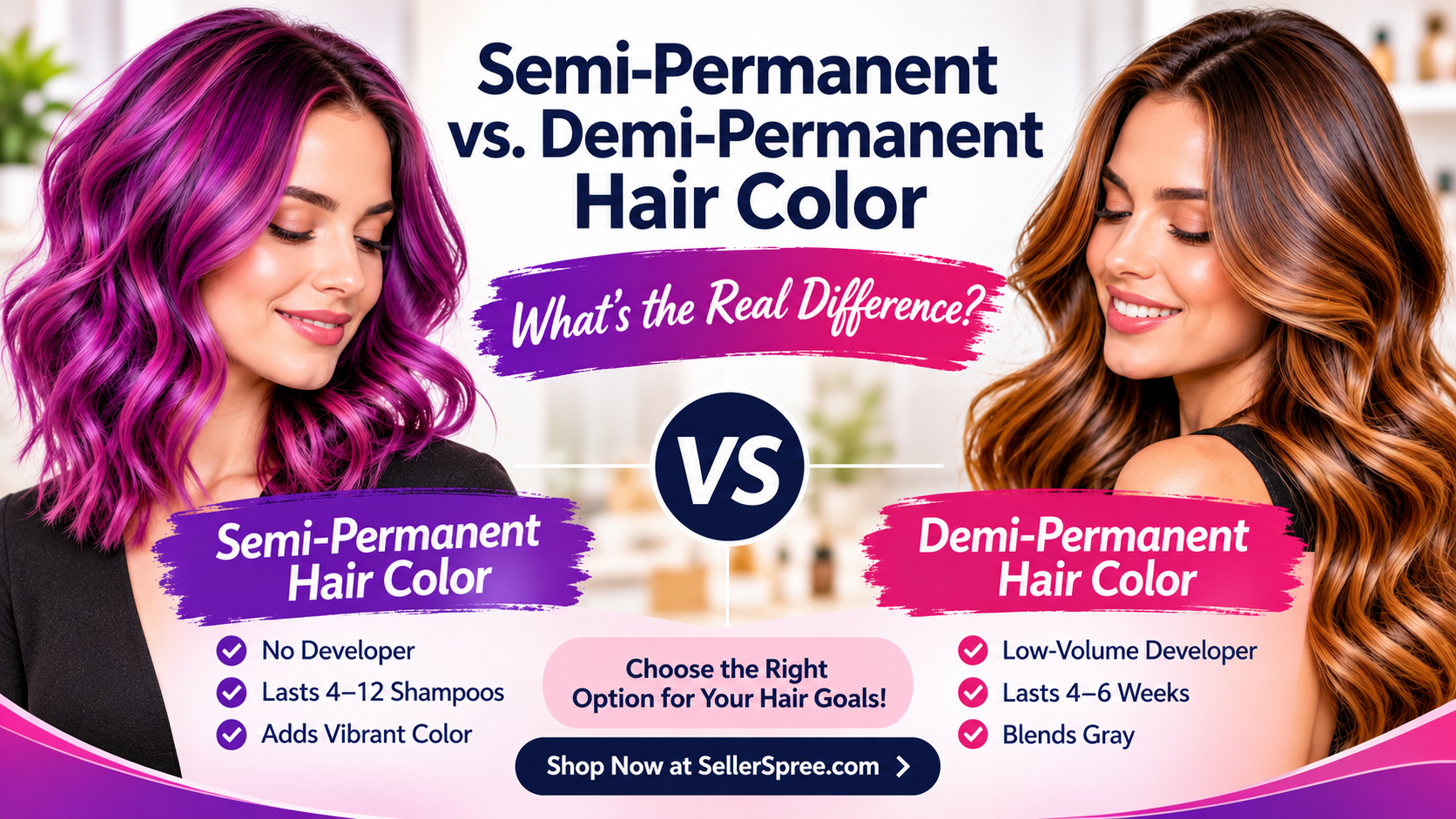
Quick answer: Semi-permanent hair color coats the hair shaft without ammonia or developer, lasting 4–12 shampoos before fading completely. Demi-permanent color uses a low-volume developer to deposit pigment slightly beneath the cuticle, lasting 4–6 weeks and blending gray more effectively. Choose semi-permanent for temporary fun shades and demi-permanent for longer-lasting, low-commitment color that still washes out over time.
Choosing between semi-permanent and demi-permanent hair color can feel confusing, especially when both promise gentle, low-damage results. The two formulas sound similar, sit next to each other on salon shelves, and often get lumped together in product descriptions. But they work in distinctly different ways, and picking the wrong one can leave you disappointed with color that fades too fast or doesn’t fade fast enough.
This guide breaks down exactly how semi-permanent and demi-permanent color differ, where each one fits into your hair care routine, and how to decide which option suits your hair goals. We’ll also compare demi-permanent color to true permanent dye, since that’s another common point of confusion for anyone shopping for at-home or professional hair color.
What Is the Difference Between Semi-Permanent and Demi-Permanent Color?
The core difference comes down to how deep the color penetrates the hair shaft and whether a developer is involved.
Semi-permanent hair color sits on the outer layer of the hair cuticle. It contains no ammonia and no (or very low) peroxide, so it doesn’t open the hair shaft to deposit pigment deeper inside. Instead, the color molecules coat the strand, which is why semi-permanent dye washes out gradually and evenly, typically within 4 to 12 shampoos depending on the brand and your hair’s porosity.
Demi-permanent hair color, on the other hand, uses a low-volume developer (usually 5 to 10 volume) to lightly open the cuticle and deposit pigment just beneath the surface. This gives demi-permanent color more staying power than semi-permanent formulas, generally lasting 4 to 6 weeks, while still being gentler than permanent dye since it contains no ammonia and doesn’t lift your natural pigment.
The biggest difference between semi-permanent and demi-permanent hair color is how each formula deposits color and how long the results typically last.
Here is a simple comparison:
| Feature | Semi-Permanent |
Demi-Permanent |
| Color process | Direct dye deposition | Oxidative color process |
| Developer | Usually not required | Usually required |
| Longevity | Around 4 to 12 washes | Around 12 to 28 washes |
| Gray coverage | Not designed for gray coverage | Blends some gray hair |
| Lightening ability | Does not lighten hair | Generally does not lighten hair |
| Color results | Temporary color enhancement | Richer, longer-lasting color |
| Best for | Temporary color changes | Refreshing and deepening color |
Keep in mind that these timelines are general estimates. Actual results vary by manufacturer, hair condition, color selection, and application technique.
If you’re searching for a specific product, SellerSpree’s Semi & Demi Permanent Color category carries both types from trusted professional brands, so you can compare formulas side by side before buying.
Semi Color vs. Demi Color: Which One Fades Faster?
Semi-permanent color fades faster than demi-permanent color because it never bonds with the inner structure of the hair. Every wash gradually strips away the surface pigment, which means the color fades evenly rather than growing out in a noticeable line at the roots.
Demi-permanent color fades more gradually and often loses some vibrancy before it fully disappears. Because it deposits pigment slightly beneath the cuticle, it holds up better against washing but will still shift over the weeks as the color molecules break down.
For color that needs to last through several weeks of regular shampooing, like the tonal shades in the Matrix Color Sync line, demi-permanent formulas are the better choice. For a short-term color experiment, a semi-permanent option like L’Oréal Professionnel Colorful Iced Mint delivers bold payoff without a long-term commitment.
Demi Color vs. Permanent Color: What Sets Them Apart?
Permanent hair color is the most committed option of the three. It uses a higher-volume developer to fully open the hair cuticle, allowing ammonia to lift your natural pigment while new color molecules bond permanently inside the shaft. The result lasts until the color grows out, and it’s the only option capable of lightening hair or achieving full gray coverage that doesn’t fade.
Demi-permanent color can’t lighten hair and won’t achieve complete gray coverage on its own, but it’s significantly gentler on strands. Choose demi-permanent color if your hair is damaged, color-treated, or if you simply want to refresh tone and shine without the long-term commitment of permanent dye. Choose permanent color if you’re covering significant gray or making a dramatic, lasting change in shade.
Products like the L’Oréal Professionnel Dia Richesse line are formulated specifically for this middle ground, offering rich, glossy tone without ammonia.
Semi vs. Demi Permanent Hair Dye: Which One Is Right for You?
The right formula depends on three factors: your hair’s current condition, how long you want the color to last, and whether you need gray coverage.
- Choose semi-permanent dye if you want to experiment with a fun or unconventional shade, like the Matrix Socolor Cult Lucky Duck Yellow, without worrying about long-term upkeep or root maintenance.
- Choose demi-permanent dye if you want to blend early gray strands, deepen your natural color, or add richness and shine that lasts closer to a month, such as with Kenra Demi-Permanent Color 1N Natural.
- Choose semi-permanent dye if your hair is already chemically processed and you want to avoid any additional developer exposure.
- Choose demi-permanent dye if you’re transitioning away from permanent color and want a gentler way to maintain tone between full-color appointments.
Is Semi-Permanent or Demi-Permanent Better for Gray Hair?
- Your choice depends on how much gray hair you want to address.
- Semi-permanent hair color is generally not designed to cover gray hair. It may add a slight tint to some gray strands, but the results can be uneven or less noticeable.
- Demi-permanent hair color is usually a better choice for blending gray hair. It can soften the contrast between natural hair color and gray strands while maintaining a more natural appearance.
- However, demi-permanent color does not guarantee complete gray coverage. If you need full coverage, permanent hair color may be a more suitable option.
Why Conditioner Matters More Than You Think
Regardless of which formula you choose, a good conditioning routine extends the life of your color and keeps your strands healthy. Both semi-permanent and demi-permanent dyes sit closer to the hair’s surface than permanent color, which means frequent washing with harsh shampoo can accelerate fading. A sulfate-free, color-safe conditioner helps seal the cuticle, lock in pigment, and reduce the dullness that comes from repeated rinsing. Pairing your color treatment with the right aftercare product is just as important as picking the right shade.
Which Color Formula Should You Choose Next?
Semi-permanent and demi-permanent hair color both offer a gentler alternative to permanent dye, but they serve different purposes. Semi-permanent color is best for short-term experimentation and vibrant, temporary shades. Demi-permanent color is best for longer-lasting tone, subtle gray blending, and reduced commitment compared to permanent dye.
Once you know which formula fits your hair goals, browse SellerSpree’s full Semi & Demi Permanent Color collection to compare shades, brands, and formulas from names like L’Oréal Professionnel, Matrix, and Kenra. Whether you’re after a bold temporary color or a subtle demi-permanent refresh, stock up on your next shade—and the conditioner to protect it – at Sellerspree.com.
Frequently Asked Questions
- How much does semi-permanent or demi-permanent hair color typically cost?
Pricing varies by brand and size, but professional semi- and demi-permanent color products on SellerSpree generally range from around $3 to $13 per tube, making it affordable to experiment with different shades. - How long does each type of color last?
Semi-permanent color typically lasts 4 to 12 shampoos, while demi-permanent color lasts closer to 4 to 6 weeks before fading noticeably. - Is demi-permanent color damaging to hair?
Demi-permanent color is gentler than permanent dye since it contains no ammonia and uses only a low-volume developer. It’s generally considered safe for regular use, though it can still cause mild dryness if used too frequently without adequate conditioning. - Are there alternatives if I don’t want to commit to either option?
Yes. Color-depositing conditioners and temporary color sprays offer even shorter-lived results than semi-permanent dye and can be a good option if you want to test a shade before committing to a full application. - Who should use demi-permanent color instead of permanent color?
Anyone with damaged, color-treated, or fine hair who wants to refresh tone, add shine, or lightly blend gray without the long-term commitment and harsher chemicals of permanent dye is a good candidate for demi-permanent color.